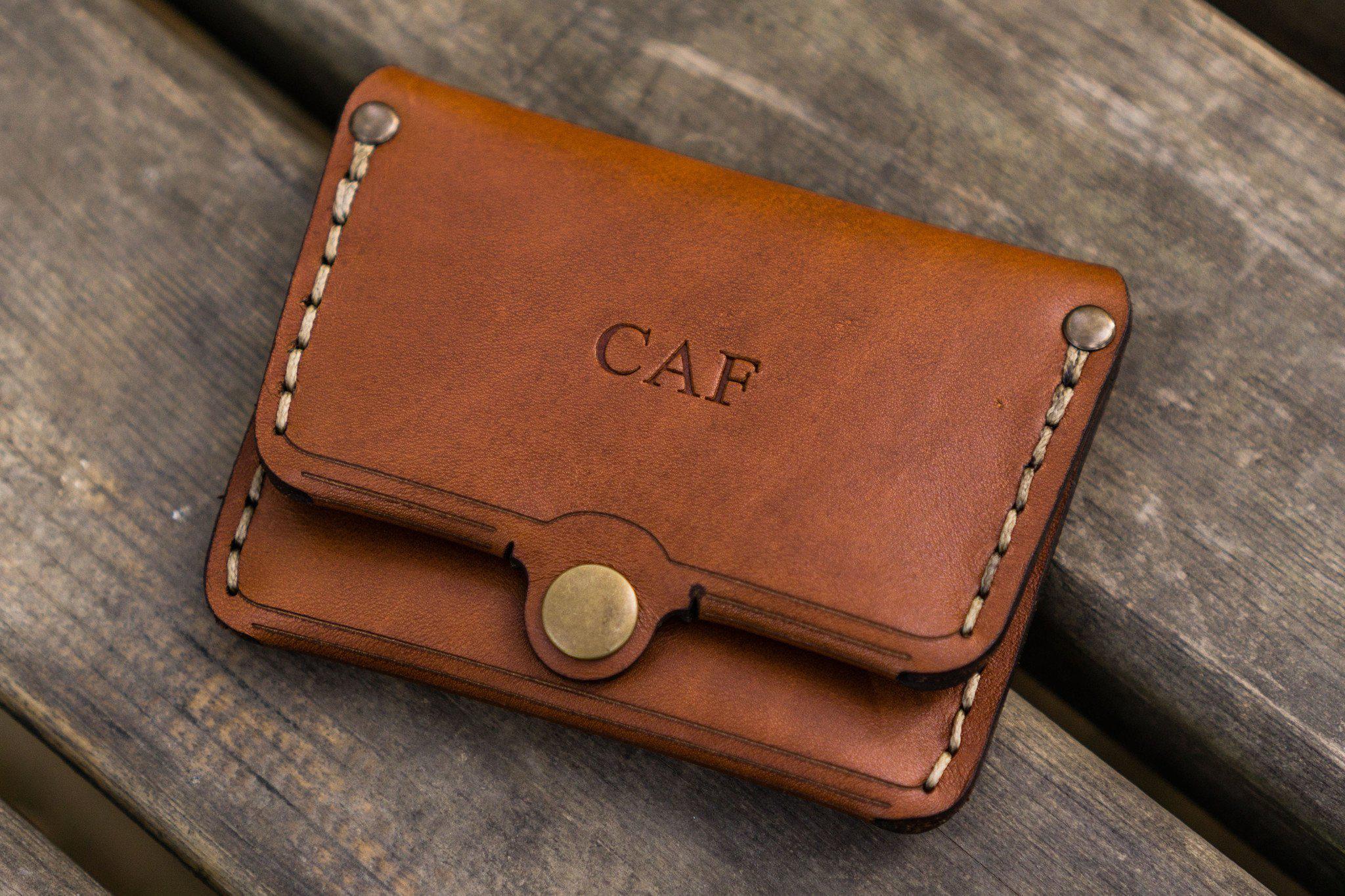




Creating a custom leather wallet is an exciting and rewarding project, blending craftsmanship, design, and personal expression into one functional and stylish piece of art. In this guide, we’ll explore everything you need to know about designing and making your own leather wallet—from choosing the right materials to mastering the techniques required for constructing a high-quality piece. Whether you’re a novice or have some experience with leatherworking, this article will provide you with all the insights to create a wallet that’s uniquely yours.
1. Why Make a Custom Leather Wallet?
Before diving into the step-by-step process of crafting a leather wallet, it’s important to understand why someone might want to create their own wallet. Mass-produced wallets are convenient, but they often lack individuality, craftsmanship, and longevity. A custom leather wallet, on the other hand, can be designed exactly to your specifications, combining practicality with personal style. Additionally, making a leather wallet can be an immensely satisfying process. You get to decide on every detail, from the type of leather to the stitching technique.
Benefits of a Custom Leather Wallet:
- Unique Design: A wallet made by your hands is one-of-a-kind, with no chance of someone else having the same one.
- Quality and Durability: Leather, if treated and cared for correctly, lasts for years, often becoming more beautiful as it ages.
- Customization: You can select the exact leather, stitching, color, and compartments you need, making it more practical for your lifestyle.
- Craftsmanship Satisfaction: Completing a leather project like this gives you a sense of accomplishment and pride in your handiwork.
2. Materials You’ll Need
To begin crafting your leather wallet, you’ll need the right materials. These tools and materials not only help ensure a quality result, but they also make the crafting process smoother and more enjoyable. Here’s a breakdown of what you’ll need:
a. Leather:
The most important material when making a leather wallet is, of course, leather. There are many types of leather available, and each has its own set of characteristics. The most popular choices for wallets are vegetable-tanned leather and chrome-tanned leather.
- Vegetable-tanned leather: Known for its natural look, durability, and ability to develop a rich patina over time. It’s eco-friendly, as it’s tanned using plant-based materials.
- Chrome-tanned leather: Processed using chromium salts, this type of leather is more flexible and resistant to water but doesn’t develop a patina like vegetable-tanned leather.
b. Thread:
To stitch your wallet, you’ll need strong and durable thread. Waxed polyester thread or linen thread is commonly used for leatherworking because they hold up well over time and provide a clean, sharp stitch.
c. Tools:
The tools you need will vary depending on the complexity of your wallet design, but the basics include:
- Cutting tools: A sharp utility knife or rotary cutter for cutting the leather.
- Edge tools: Edge bevelers and slickers for smoothing and finishing the edges of the leather.
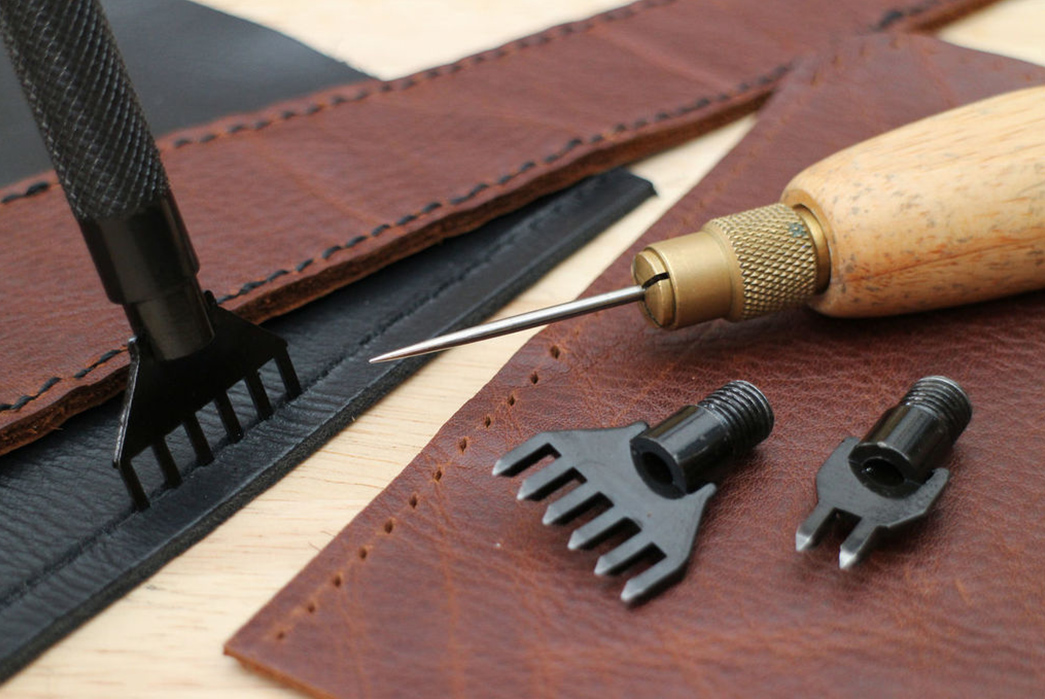
- Stitching tools: A stitching awl for creating holes and a pricking iron for evenly spaced holes.
- Ruler and compass: For precise measurements and curves.
- Burnishing tools: These help smooth the edges of the leather for a polished look.
d. Hardware (Optional):
If you want to add features like a snap closure, magnetic clasp, or a money clip, you’ll need appropriate hardware. Rivets, snaps, and magnetic fasteners are commonly used in custom wallet designs.
3. Designing Your Custom Leather Wallet
Creating a wallet design begins with a concept. This could be anything from a simple bi-fold wallet to a more complex design with multiple compartments, a coin pocket, or cardholder slots. The key is to think about functionality, aesthetics, and ease of use.
a. Wallet Types
There are several types of wallets you can design, each with its own set of features:
- Bi-fold wallet: The classic wallet that folds in half, with space for cards, cash, and an ID.
- Tri-fold wallet: Similar to the bi-fold, but with an additional fold for extra capacity.
- Slim wallet: A minimalist design focused on carrying just a few cards and bills, often with a money clip.
- Cardholder: A thin, sleek design intended for carrying only cards.
- Money clip wallet: A wallet with a money clip that holds cash securely, often in a minimalist style.
b. Measurements
Once you’ve decided on the type of wallet, take precise measurements. A standard bi-fold wallet, for example, will usually be about 4.25 inches tall by 3.25 inches wide when folded. You’ll need to plan for the dimensions of each piece of leather, including the main body, card slots, and interior compartments.
4. Cutting and Preparing the Leather
When preparing your leather pieces, you’ll want to make sure all cuts are precise. Use a sharp utility knife or rotary cutter and a metal ruler for straight lines. For more intricate shapes like card slots or curved edges, a compass or curved ruler can help.
a. Cutting the Leather:
Once your pattern pieces are ready, trace them onto the leather using a pencil or a fine-tipped pen. Remember that you should add about a quarter-inch margin around the pattern to account for stitching holes.
b. Preparing the Edges:
To ensure a professional finish, you’ll want to smooth out and round off the edges of the leather after cutting. This can be done using an edge beveler to remove sharp edges, followed by a slicker to burnish and smooth the leather. These steps give your wallet a clean, polished look.
5. Stitching Your Leather Wallet
Now comes one of the most satisfying parts of the process: stitching the leather together. This step can be as intricate or as simple as you like, but it’s important to take your time to achieve a neat, even stitch.
a. Preparing the Holes:
Before stitching, you’ll need to create evenly spaced holes along the edges of your leather pieces. Use a pricking iron or stitching chisels to create uniform holes. This ensures that your stitching will be consistent and professional-looking.
b. Stitching the Leather:
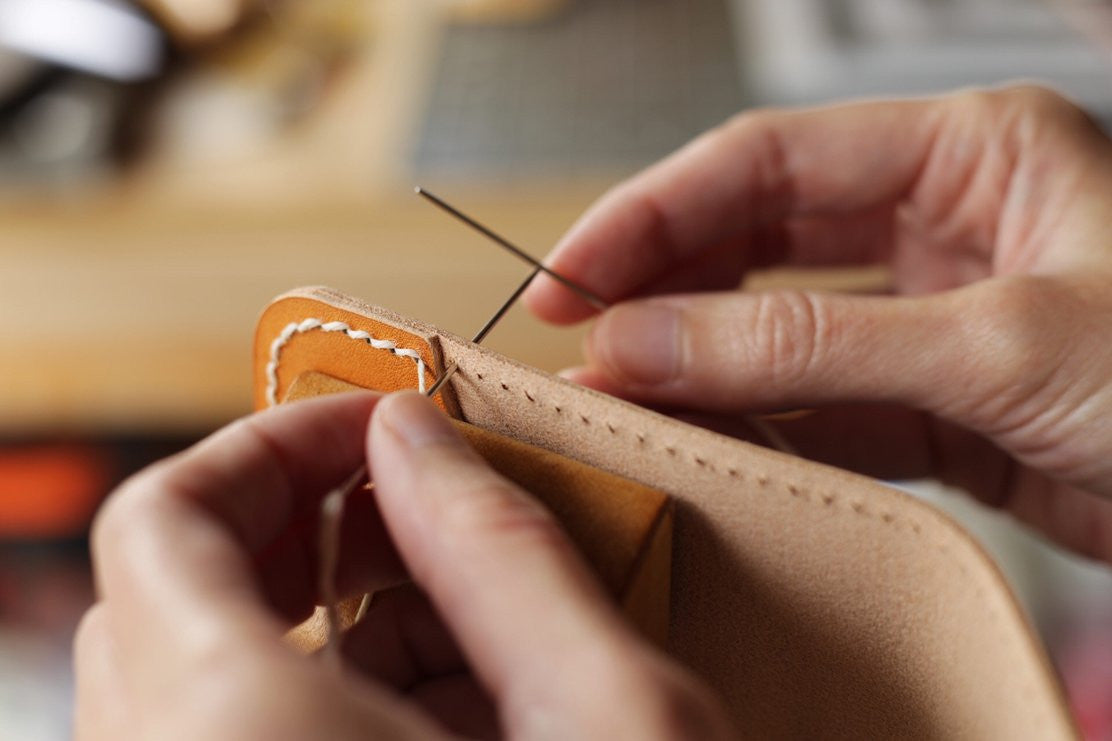
The most common stitching technique for leather wallets is saddle stitching, which involves two needles and waxed thread. Start at one end of the wallet and work your way around. Use an awl to puncture the leather and thread the needle through the holes.
For a durable stitch, it’s essential to keep your tension consistent. Once you’ve stitched all the way around your wallet, tie off the ends of the thread securely. If you’re new to leatherworking, it may take a few tries to get the tension just right, but with practice, your stitching will become more refined.
6. Finishing Touches
The finishing touches are what truly elevate your custom leather wallet. These steps add refinement and ensure your wallet lasts for years to come.
a. Burnishing the Edges:
After stitching, the edges of the leather need to be burnished. This is where the edge slicker comes in handy. Using some water or a leather-specific burnishing solution, rub the edges of the leather with the slicker to smooth them out and give them a rounded appearance.
b. Waxing and Polishing:
Waxing your leather helps protect it from water and dirt, while also enhancing the natural look of the leather. After applying a thin layer of wax, use a cloth to buff the surface and give it a nice sheen.
c. Adding Hardware (Optional):
If your design calls for any metal hardware like a snap closure, rivets, or a money clip, now is the time to attach them. Use a rivet setter or snap tool to install these components securely into place.
7. Caring for Your Custom Leather Wallet
A leather wallet is an investment, and to ensure it stands the test of time, it’s important to care for it properly. Leather is a natural material that benefits from proper maintenance and occasional cleaning.
a. Regular Cleaning:
To keep your wallet looking its best, clean it regularly with a soft cloth. You can also use a mild leather cleaner if necessary. Avoid using harsh chemicals, as they can damage the leather.
b. Conditioning:
Leather can dry out over time, so it’s important to condition it periodically. Leather conditioners help to keep the material supple and prevent it from cracking.
c. Storing:
When you’re not using your wallet, store it in a cool, dry place, away from direct sunlight and humidity. If your wallet gets wet, dry it slowly at room temperature—never use direct heat.
8. Conclusion: Enjoy Your Custom Leather Wallet
Creating your own custom leather wallet is a truly fulfilling experience. Whether you’re making it for yourself or as a gift, the effort you put into crafting a high-quality leather wallet will pay off with a functional, long-lasting, and beautiful product. By choosing your materials carefully, following the correct techniques, and adding your own personal touches, you can create a wallet that is truly one-of-a-kind.
It’s a project that requires patience and attention to detail, but the result is a timeless accessory that will only get better with age. And who knows? After crafting your first wallet, you might just be inspired to create even more leather goods, each more intricate and unique than the last.