



Sushi looks simple. A slice of fish. A pillow of rice. Maybe a strip of seaweed. Yet behind this apparent simplicity lies one of the most demanding culinary arts in the world. Sushi is not just food; it is a disciplined craft shaped by centuries of refinement, obsessive attention to detail, and a philosophy that values restraint over excess.
To make truly great sushi is to master a collection of “secret techniques”—not secret because they are hidden, but because they are subtle, often invisible to the untrained eye, and learned only through patience and repetition. This article explores those techniques in depth, from rice chemistry to knife physics, from fish biology to human perception, revealing what separates acceptable sushi from unforgettable sushi.
1. The Philosophy Behind Perfect Sushi
Before discussing tools or ingredients, it is essential to understand the mindset behind sushi-making.
Simplicity Is the Ultimate Complexity
Sushi follows a minimalist philosophy. There are few components, which means there is nowhere to hide mistakes. A heavy sauce cannot mask poorly cooked rice. Garnishes cannot rescue fish that was cut incorrectly. Every element must stand on its own.
The sushi chef’s goal is not to impress with abundance, but to achieve harmony. Each piece should feel complete, balanced, and inevitable—nothing added, nothing missing.
Respect for Ingredients
Perfect sushi begins with respect. Fish is treated as something alive in memory, not a raw material to be manipulated aggressively. Rice is not filler; it is the foundation. Even water, temperature, and air exposure are considered carefully.
This respect leads to a core principle: do less, but do it better.
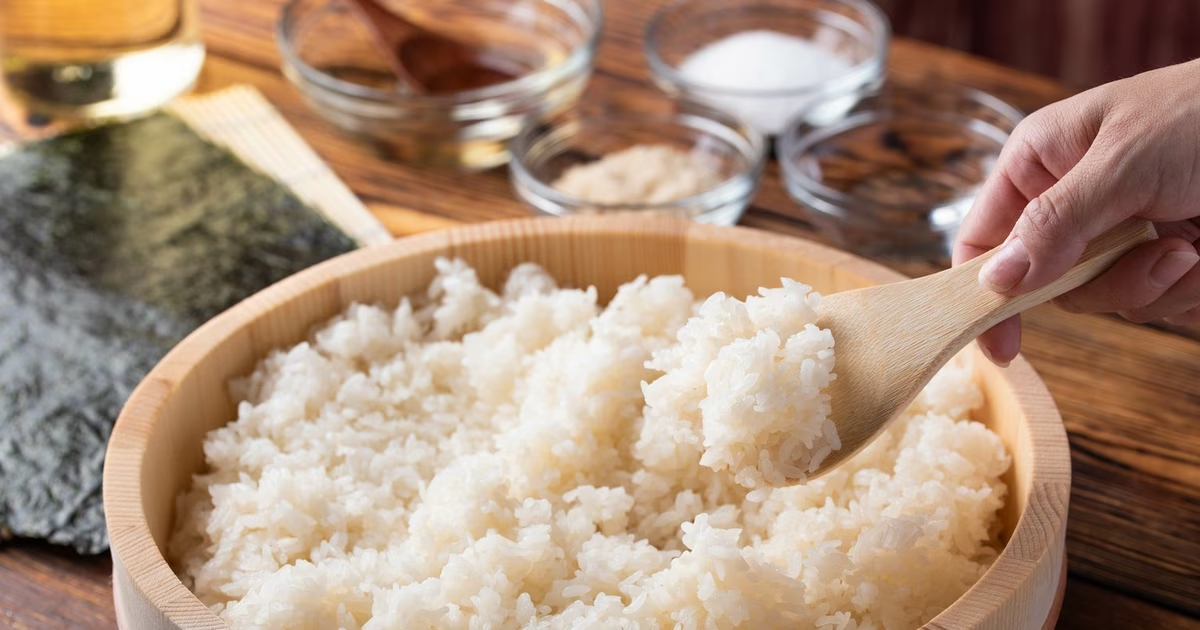
2. Rice: The Quiet Hero of Sushi
Most people focus on the fish. Professionals focus on the rice.
Choosing the Right Rice
Sushi rice is not just “short-grain rice.” It must have:
- High stickiness without becoming gluey
- A soft outer layer and a slightly firm core
- The ability to absorb seasoning evenly
The rice grain should hold together when pressed, yet separate easily in the mouth.
Washing: Removing What You Don’t Want
Rice washing is not about cleaning dirt; it is about controlling starch.
Excess surface starch causes:
- Gummy texture
- Dull flavor
- Poor absorption of seasoning
The technique involves gentle agitation, frequent water changes, and stopping before the grain is damaged. Overwashing is as harmful as underwashing.
Cooking Precision
Perfect sushi rice is cooked, not boiled. Water ratios matter, but so does:
- Soaking time before cooking
- Heat curve during cooking
- Resting time after cooking
The goal is uniform hydration of every grain.
Seasoning: Timing Is Everything
Sushi seasoning is a balance of acidity, sweetness, and salt. But the secret lies in when it is added.
Seasoning must be folded into hot rice, not cold, allowing:
- Better absorption
- Aroma release
- Controlled evaporation of excess moisture
Mixing is done with slicing motions, never stirring, to avoid crushing grains.
Temperature Control
Sushi rice should never be cold. It should be slightly warmer than body temperature. Cold rice dulls flavor and hardens texture; hot rice cooks the fish.
Maintaining this balance requires constant monitoring and intuition.
3. Fish Selection: More Than Freshness
“Fresh” is not always best for sushi.
Understanding Fish Maturity
Some fish improve with controlled aging. During this time:
- Enzymes break down muscle fibers
- Umami compounds increase
- Texture becomes more tender
This process, when done correctly, enhances flavor without compromising safety.
Fat Distribution and Seasonality
Fish taste different depending on:
- Season
- Diet
- Water temperature
A professional sushi chef understands when a fish is at its peak and adjusts preparation accordingly.
Smell, Color, and Touch
Perfect fish has:
- A clean, ocean-like aroma
- Vibrant, natural color
- Elastic texture that springs back
Any dullness indicates decline.

4. Knife Skills: Where Physics Meets Art
A sushi knife is not just sharp; it is precise.
The Importance of a Single Cut
Each slice of fish should be cut in one smooth motion. Multiple strokes:
- Damage cell structure
- Release excess moisture
- Create rough surfaces
A clean cut preserves flavor and shine.
Angle and Direction
The cutting angle affects:
- Mouthfeel
- Visual appeal
- How the fish interacts with rice
Cuts are adjusted based on:
- Fat content
- Muscle grain direction
- Intended serving style
Knife Maintenance
A dull knife is a disaster. Daily sharpening is not optional. The edge must be refined enough to glide through fish using minimal pressure.
5. Texture Engineering: The Hidden Science
Perfect sushi is designed to change as you eat it.
Rice and Fish Interaction
The rice should gently collapse in the mouth at the same moment the fish releases its oils. This requires:
- Proper rice compression
- Correct fish thickness
- Accurate hand pressure
Too tight, and the rice becomes dense. Too loose, and it falls apart.
Temperature Contrast
Fish is often kept cooler than rice. This contrast:
- Enhances aroma
- Improves texture perception
- Makes flavors feel more dynamic
Moisture Balance
Excess moisture dulls flavor. Too little creates dryness. Every element must be controlled to maintain equilibrium.
6. Hands as Tools: The Forgotten Technique
Sushi is shaped by hands, not machines.
Body Temperature Matters
Hands are warmed or cooled intentionally. Warm hands soften rice slightly, allowing easier shaping. Cold hands firm the fish.
Pressure Awareness
Shaping sushi requires almost no force. The chef uses:
- Fingertips for guidance
- Palms for structure
- Gravity for assistance
The rice is encouraged, not compressed.
Muscle Memory
After thousands of repetitions, hands learn how much pressure is needed without conscious thought. This consistency is one of the greatest “secrets” of sushi mastery.
7. Wasabi: More Than a Spicy Accent
Real wasabi is delicate, aromatic, and fleeting.
Freshness and Timing
Wasabi loses its aroma quickly after grating. It should be used immediately. Its purpose is not heat, but:
- Enhancing aroma
- Balancing fat
- Cleansing the palate subtly
Placement Matters
Wasabi is placed between fish and rice, not on top. This allows its aroma to rise through the fish as you eat.
8. Soy Sauce: Restraint Over Drowning
Soy sauce should never dominate.

Dipping Technique
Fish, not rice, touches the soy sauce. Rice absorbs too much liquid and overwhelms balance.
Seasoning Philosophy
Great sushi is already seasoned. Soy sauce is optional, not mandatory. In many traditional settings, it is applied by the chef, not the diner.
9. Timing: Sushi as a Moment, Not an Object
Sushi is meant to be eaten immediately.
Seconds Matter
From shaping to serving, time is critical. Waiting causes:
- Rice cooling
- Moisture loss
- Aroma dissipation
Perfect sushi exists for a brief window.
Serving Order
Lighter flavors come first. Richer, fattier pieces come later. This progression protects the palate and enhances contrast.
10. Visual Design: Eating With the Eyes
Appearance influences taste perception.
Natural Aesthetics
Sushi avoids artificial decoration. Beauty comes from:
- Clean lines
- Natural color contrast
- Subtle shine
Proportion and Symmetry
Each piece should feel balanced in size and shape. Too large feels aggressive; too small feels unsatisfying.
11. Training and Discipline: The Long Road
There are no shortcuts to perfect sushi.
Repetition and Observation
Traditional training emphasizes:
- Watching before doing
- Doing before questioning
- Mastery through repetition
This builds intuition that cannot be taught verbally.
Humility as a Skill
Even experienced chefs continue refining basics. Pride is the enemy of improvement.
12. Common Myths About Sushi
Myth 1: Sushi Is All About Raw Fish
Reality: Rice matters more.
Myth 2: More Ingredients Mean Better Sushi
Reality: Fewer ingredients demand higher skill.
Myth 3: Anyone Can Learn Sushi Quickly
Reality: Basic sushi is easy; great sushi is lifelong.
13. The Emotional Side of Sushi
Great sushi creates a quiet emotional response. It feels:
- Calm
- Focused
- Satisfying without heaviness
This is not accidental. It is the result of harmony between technique and intention.
14. Why Perfect Sushi Is Rare
Perfect sushi requires:
- Exceptional ingredients
- Technical precision
- Timing
- Sensory awareness
- Emotional restraint
Remove any one of these, and the magic weakens.
15. The True Secret
The greatest secret behind perfect sushi is not hidden knowledge. It is commitment—to learning slowly, to respecting materials, and to caring deeply about small details that most people never notice.
Sushi rewards those who pay attention.
In a world obsessed with speed and excess, sushi stands as a reminder that perfection often lies in quiet mastery.