



Food is more than just sustenance; it’s a reflection of culture, history, and the people who create it. Global cuisine is a fascinating mosaic of regional influences, each dish telling the story of its place of origin, its people, and the flavors that shaped it over centuries. Whether it’s the spices of India, the richness of French sauces, or the umami-packed dishes from Japan, every cuisine has a distinct regional flair.
In this exploration, we’ll take a deep dive into several iconic dishes from around the world and unravel the regional influences that make them unique. Can you guess where each dish comes from and what historical or cultural factors contributed to its creation? Let’s embark on this flavorful journey across continents, tracing the roots of culinary traditions and discovering what makes each dish not only special but also a key element in its region’s identity.
1. Paella – Spain: A Symphony of Local Ingredients
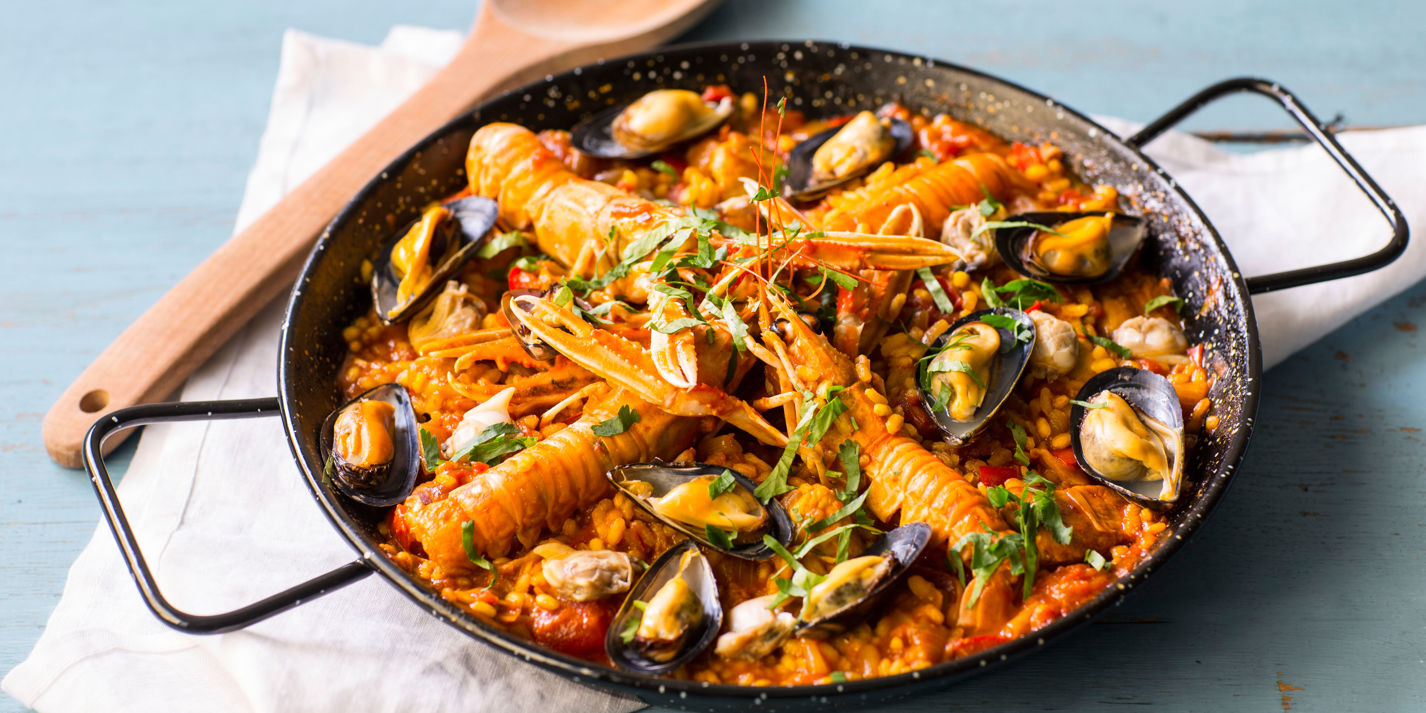
Paella, the iconic Spanish dish, is a vibrant combination of saffron-infused rice, seafood, meats, and vegetables. Originating in Valencia, Paella is often regarded as the heart and soul of Spanish cuisine. The dish’s primary regional influence comes from the Mediterranean’s bounty, where rice, seafood, and fresh vegetables thrive.
The version that most people are familiar with—Paella Valenciana—includes a variety of local meats, such as chicken, rabbit, and sometimes duck, in addition to the famed rice. Historically, it was cooked by farmers and fishermen using whatever local ingredients were available. The Mediterranean climate, with its warm temperatures and abundant sea life, also plays a significant role in the way Paella has evolved.
Though modern versions now incorporate international ingredients, such as chorizo or different seafood, the base of the dish remains firmly tied to the soil and sea of the Mediterranean coast. The introduction of saffron, which is grown in the region, gives the rice its distinct golden color and rich flavor.
2. Sushi – Japan: From Simplicity to Elegance
Sushi, a dish synonymous with Japanese cuisine, is an exemplary reflection of the Japanese ethos of balance, simplicity, and respect for natural flavors. The dish consists of vinegared rice paired with various ingredients, including raw fish, seafood, and occasionally vegetables. While the concept of sushi originated as early as the 8th century, its modern form evolved during the Edo period (17th–19th centuries) in Tokyo.
The regional influence in sushi is both geographical and cultural. Japan, an island nation, has a long history of fishing and seafood consumption. The abundance of fresh fish from surrounding waters allowed for the development of a cuisine focused on fresh, raw ingredients. Sushi is not only a meal but an art form in Japan, where chefs spend years mastering the precise cutting techniques and the balance of flavors.
The Japanese philosophy of wabi-sabi—the appreciation of imperfection and the transient beauty of nature—can be seen in the minimalistic presentation and the refined, yet simple, nature of sushi. The subtle interplay between fish, rice, and seasonings exemplifies the Japanese respect for seasonality and local ingredients.
3. Curry – India: Spices, History, and Geography Combined
Curry is arguably one of the most famous and widely recognized global dishes, but it’s important to note that what the world knows as “curry” is a collective term for a wide variety of regional dishes from India and beyond. In India, curry refers to dishes made with a variety of spices, herbs, and meat, vegetables, or legumes. Each region of India boasts its own take on curry, shaped by the local climate, geography, and available ingredients.

North Indian curry tends to be rich and creamy, often incorporating dairy products like yogurt, cream, or ghee. The use of spices like cumin, coriander, turmeric, and garam masala results in bold, robust flavors. In contrast, South Indian curry tends to be lighter, with coconut and tamarind often used to create tangy, fragrant dishes. The distinct use of mustard seeds, curry leaves, and tamarind in the South is reflective of the tropical climate and abundance of coconut.
Curry’s journey across India is also influenced by historical events. The Mughal Empire, for example, left a lasting mark on Northern Indian curries, incorporating Persian and Central Asian spices and techniques into traditional recipes. Meanwhile, the colonial history of British influence in India led to the creation of dishes like chicken tikka masala, which is considered a fusion of Indian and British flavors.
4. Pizza – Italy: The Evolution of a Classic
When you think of Italy, pizza is undoubtedly one of the first dishes that comes to mind. While pizza’s roots are traced back to ancient civilizations (the Greeks and Romans both had forms of flatbreads topped with various ingredients), the pizza we know and love today originated in Naples, Italy, during the 18th or 19th century.
Naples, with its fertile volcanic soil and proximity to the Mediterranean, provided a rich variety of local produce—tomatoes, mozzarella cheese, and fresh herbs like basil—that formed the backbone of the modern pizza. The Margherita pizza, in particular, is said to have been created in honor of Queen Margherita of Savoy in 1889, symbolizing the colors of the Italian flag with its red tomatoes, white mozzarella, and green basil.
The regional influence here is unmistakable: Naples’ historical connection to farming, as well as its proximity to the sea, means that pizza is often crafted with locally sourced, fresh ingredients. The thin crust, crispy yet chewy texture, and simple toppings are a direct result of the region’s culinary tradition of emphasizing high-quality, locally produced items.
5. Tacos – Mexico: The Heart of Mexican Cuisine
Tacos, one of Mexico’s most famous and widely enjoyed dishes, have become a global phenomenon, but their origins lie deep in Mexican culture and history. Tacos are essentially soft or hard tortillas filled with a variety of ingredients, ranging from grilled meats and seafood to vegetables, cheese, and salsas.
The taco is a product of Mexican agricultural traditions and the rich diversity of ingredients available in the country. The taco is often made with corn tortillas, which have been a staple food in Mexico for thousands of years, originating from the indigenous peoples of Mesoamerica. Corn, or maize, is at the heart of Mexican cuisine, and its use in tacos is a nod to the ancient agricultural practices that have shaped the cuisine.
Regional influences come into play with the variety of fillings and toppings used across Mexico. For example, in the northern regions, beef is more common, while in the coastal regions, fish tacos and shrimp tacos are popular. In the south, tacos might feature pork or chicken, often seasoned with spicy salsas or marinated in citrus-based mixtures like adobo.
6. Croissant – France: A Product of Cross-Cultural Influence
The croissant, often seen as the epitome of French pastry, actually has origins that trace back to Austria. The crescent-shaped pastry’s story begins with the introduction of the kipferl, a pastry that dates back to at least the 13th century in Austria. The recipe was brought to France in the late 17th century by Marie Antoinette, the Austrian princess who married King Louis XVI of France.
While the origins of the croissant are Austrian, it was in France that the pastry evolved into what we recognize today. The Viennoiserie tradition—baking techniques introduced from Vienna—became deeply embedded in French culinary culture, particularly in Paris. The rich, buttery texture of the croissant, the flaky layers, and its iconic shape are all products of French mastery in pastry and baking techniques.
7. Poutine – Canada: Comfort Food with a French Twist
Poutine, a dish made of fries topped with cheese curds and gravy, is considered the quintessential Canadian comfort food. Originating in Quebec, this dish reflects the influence of both French and Canadian cultures. The French-speaking province of Quebec, where poutine was first created in the 1950s, has a strong culinary connection to France, particularly in the use of rich, comforting sauces.
Poutine’s popularity grew rapidly across Canada, with each region adding its own twist. In Quebec, it’s traditionally made with fresh cheese curds and a light brown gravy, while other regions may use different types of cheese or flavored gravies. The dish also symbolizes the importance of local ingredients—potatoes grown in Quebec and locally sourced meats for the gravy—blending French culinary traditions with Canadian regional elements.
8. Dim Sum – China: Small Bites, Big Influence
Dim sum is a traditional Cantonese dish that consists of small, bite-sized portions of food served in bamboo steamer baskets. This style of dining originated in southern China, particularly in the Guangdong province, and was initially a form of snack or light meal for travelers along the Silk Road.
Dim sum includes a variety of dumplings, buns, and other dishes, often filled with pork, shrimp, or vegetables. The Cantonese people, influenced by their maritime location, incorporated a wide range of ingredients into their dim sum offerings, from seafood to exotic spices.
The influence of tea culture in China is also integral to the dim sum experience, as it is often paired with tea in the traditional Chinese tea houses, known as yum cha. The ritual of tea-drinking combined with the small dishes reflects the cultural significance of socializing and sharing meals in Chinese society.
9. Biryani – South Asia: A Fragrant Rice Dish with Ancient Roots
Biryani, a spiced rice dish often served with meat, eggs, or vegetables, has its roots in the Indian subcontinent. Though it is now enjoyed across India, Pakistan, and Bangladesh, the dish was introduced to the region by Persian travelers and traders. The word “biryani” comes from the Persian word “birian”, meaning “fried before cooking,” which refers to the method of partially frying the rice and meat before cooking it together.
Biryani is a great example of the blending of regional influences, as it incorporates Persian, Mughal, and South Asian flavors. The use of fragrant spices like saffron, cardamom, and cloves, along with the layering of rice and meat, reflects both Persian culinary traditions and the rich, diverse spices of the Indian subcontinent.
Conclusion: The Beauty of Global Dishes
From Paella’s Mediterranean roots to the intricate flavors of Biryani, every dish tells a story that spans across time and geography. Whether it’s the influence of local agriculture, trade routes, or historical events, regional flavors play a significant role in shaping the dishes we know today. The beauty of global cuisine lies not only in the diversity of ingredients and techniques but also in the shared human experience of creating something special from the resources at hand.