




Tomatoes—bursting with flavor, vibrant color, and versatile in countless dishes—are often a kitchen staple. Whether you’re using them for a fresh salad, a hearty sauce, or simply as a topping, you want to make sure they stay as fresh and delicious as possible. However, knowing the best way to store tomatoes can be a bit tricky, as these fruits (yes, fruits!) are delicate and sensitive to temperature, moisture, and handling. Improper storage can lead to early spoilage, wilting, or loss of flavor.
In this article, we’ll dive into the different ways to store tomatoes, share expert tips for maintaining their quality, and uncover the science behind why tomatoes behave the way they do when it comes to freshness. Let’s explore how to extend the life of these juicy fruits while preserving their peak taste!
Why Storing Tomatoes Properly Matters
Before we jump into the different storage methods, it’s worth understanding why proper storage is so important. Tomatoes, like many other fruits, release ethylene gas, which speeds up the ripening process. Ethylene gas is a natural compound that fruits like tomatoes, apples, and bananas produce as they ripen. If tomatoes are stored improperly, they can spoil faster or lose their delicious flavor and texture. Furthermore, tomatoes are highly sensitive to temperature changes—storing them at the wrong temperature can alter their taste and texture, often making them mealy or flavorless.
So, what’s the best way to store tomatoes to keep them fresh for as long as possible while preserving their flavor? Let’s take a closer look.
1. Room Temperature: The Ideal Storage Solution for Fresh Tomatoes
When to Use This Method:
If you have ripe, just-picked tomatoes, storing them at room temperature is often the best option. Tomatoes ripen best in slightly warmer conditions and in a dry environment. Keeping them out of the fridge helps preserve their flavor and texture.
Why It Works:
Tomatoes ripen at their own pace depending on the environmental conditions, and room temperature (between 55°F-70°F or 13°C-21°C) is ideal. Storing them in a cool, dry spot away from direct sunlight allows the tomato to retain its natural sugars and acid balance, which contributes to a better flavor profile.
Storage Tips:
- Store tomatoes with the stem side down. This helps prevent air from entering the scar left behind by the stem, which could cause the fruit to spoil more quickly.
- Keep tomatoes in a single layer, as stacking them could lead to bruising and premature ripening.
- Avoid storing tomatoes near other fruits, especially those that produce ethylene gas (e.g., apples, bananas), as they can accelerate ripening and spoilage.
2. Refrigeration: For Overripe or Extra-Ripe Tomatoes
When to Use This Method:
Once your tomatoes are ripe or have started to over-ripen, refrigeration becomes necessary to prevent them from spoiling further. This is especially true for tomatoes that are extremely soft, overripe, or showing signs of decay. While refrigeration slows the ripening process, it does have some downsides.
Why It Works (and Doesn’t):
Storing tomatoes in the fridge can extend their shelf life by several days or even a week, but it’s not ideal for maintaining optimal flavor. Cold temperatures (below 50°F or 10°C) suppress the tomato’s ability to release certain compounds responsible for flavor, which can lead to a bland, mealy texture. That said, it does keep the fruit from rotting if it’s past its prime.
Storage Tips:
- If you must refrigerate tomatoes, place them in a paper bag or an airtight container to help maintain their moisture levels.
- Let refrigerated tomatoes come back to room temperature before eating to restore some of their flavor and aroma. Just take them out of the fridge about an hour before use.
- Avoid refrigerating tomatoes that are still firm or under-ripe, as this can halt the ripening process entirely and leave you with flavorless fruit.
3. Storing Cut or Sliced Tomatoes
When to Use This Method:
If you’ve cut into a tomato and have leftovers, proper storage is essential to keeping the remaining pieces fresh. The exposed flesh of a tomato can dry out or become contaminated more easily, so you want to minimize exposure to air.
Why It Works:
Once a tomato is sliced, the protective skin is no longer intact, and it’s exposed to air and bacteria. Storing cut tomatoes in the fridge helps slow bacterial growth and preserve moisture. The skin also acts as a barrier, preventing the tomato’s natural juices from leaking out.
Storage Tips:
- Store cut tomatoes in an airtight container or wrap them tightly in plastic wrap to prevent moisture loss and oxidation.
- Use cut tomatoes within 1-2 days, as they won’t stay fresh as long as whole, uncut tomatoes.
- If the cut tomatoes are soggy, consider draining excess water before storage to help prevent a mushy texture.
4. Freezing Tomatoes for Long-Term Storage
When to Use This Method:
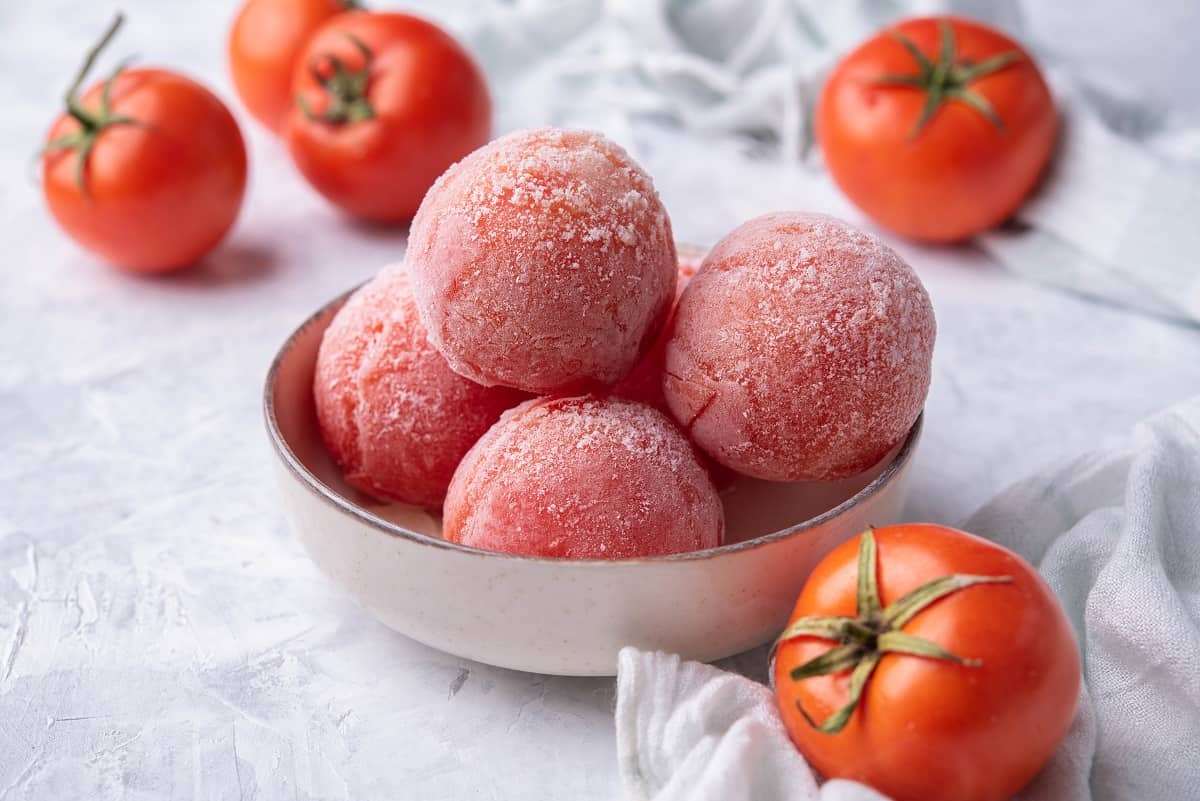
If you have an abundance of tomatoes and want to preserve them for later use, freezing is an excellent option. Freezing tomatoes doesn’t maintain their fresh texture (they become mushy once thawed), but they are perfect for cooked dishes like sauces, soups, or stews.
Why It Works:
Freezing tomatoes stops the ripening process and locks in their nutrients. However, freezing changes the texture of the tomato due to the high water content. Once thawed, the tomatoes can become soft and watery, so they’re best used in recipes that require cooking.
Storage Tips:
- Blanch tomatoes before freezing them. Place the tomatoes in boiling water for about 30 seconds, then transfer them to an ice bath. This process helps preserve flavor and color.
- After blanching, peel off the skin, core the tomato, and cut it into quarters or leave it whole, depending on your needs.
- Store frozen tomatoes in airtight freezer bags or containers. Label them with the date for easy tracking.
- Use frozen tomatoes within 6 months to ensure the best flavor and texture when cooking.
5. Storing Green (Unripe) Tomatoes
When to Use This Method:
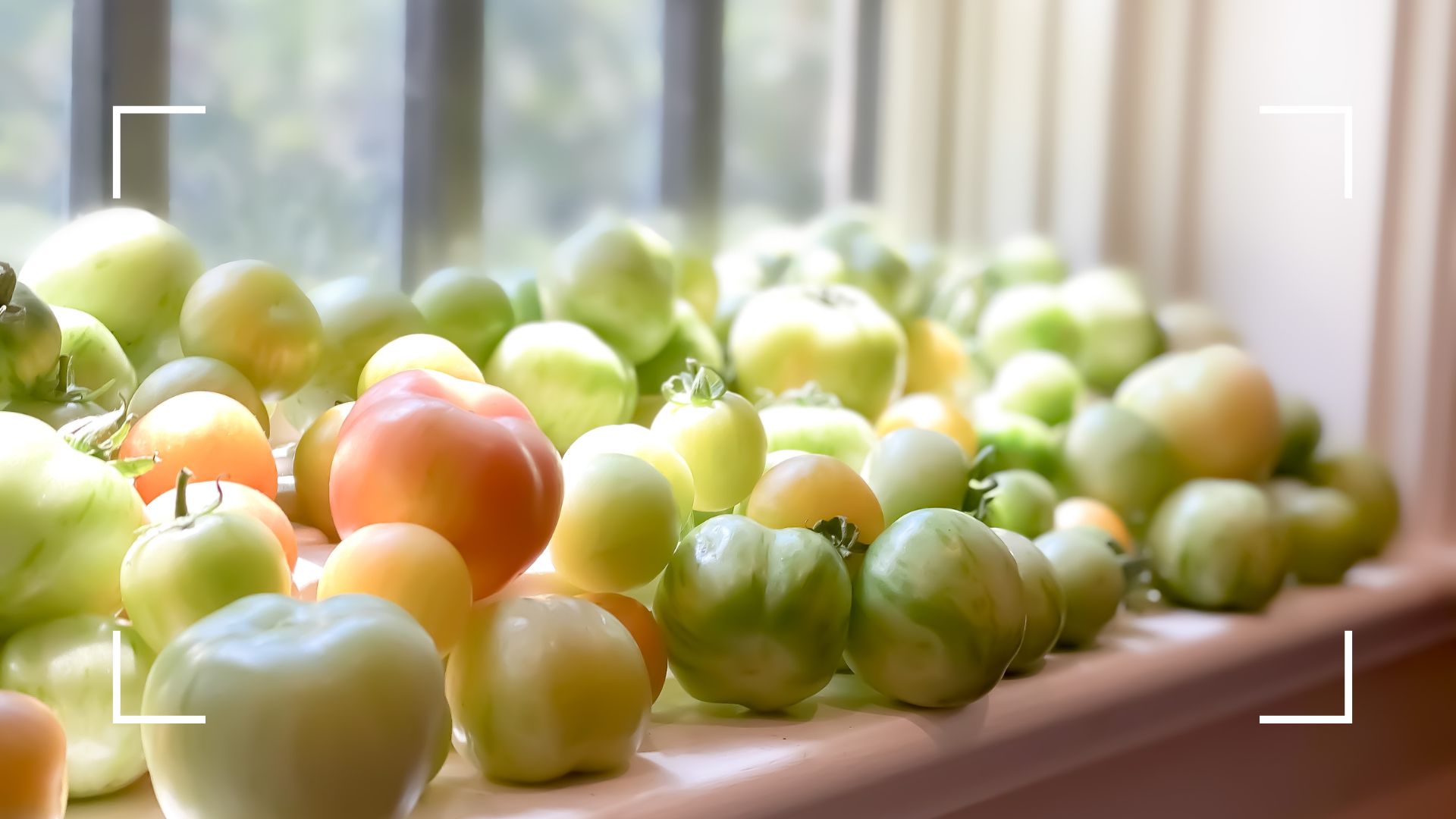
If you have green tomatoes (unripe) that haven’t reached their full color, there are ways to store them until they ripen. Many gardeners, especially those with a late-season harvest, prefer to pick their tomatoes early and ripen them indoors.
Why It Works:
Tomatoes are climacteric fruits, meaning they continue to ripen after being picked. While storing green tomatoes at room temperature will eventually cause them to ripen, some methods can help speed up the process.
Storage Tips:
- To encourage faster ripening, place green tomatoes in a brown paper bag with a ripe banana or apple. The ethylene gas released by the ripe fruit will help the tomatoes ripen faster.
- Keep green tomatoes in a cool (but not cold) location with moderate humidity, away from direct sunlight.
- For long-term storage of unripe tomatoes, try wrapping them individually in newspaper and keeping them in a dark, dry area. This can delay ripening and allow you to control when they reach their peak.
6. How to Recognize When Tomatoes Are Going Bad
While proper storage can help extend the life of tomatoes, eventually they will begin to show signs of age. Understanding when tomatoes are past their prime can save you from consuming bad fruit.
Signs of Spoilage:
- Wrinkling or Shriveling: This is a sign that the tomato has lost moisture, and it may have a less desirable texture, though it might still be usable in cooked dishes.
- Soft Spots or Mold: Mold can appear on tomatoes, especially around cuts or bruises. These tomatoes should be discarded.
- Unpleasant Odor: A sour or fermented smell indicates that the tomato has gone bad and should not be consumed.
- Excessive Juiciness: If a tomato becomes too watery, it likely lost its structure and flavor, making it less appealing for raw use.
7. The Ultimate Tomato Storage Tips Summary
To ensure your tomatoes stay fresh, flavorful, and ripe for as long as possible:
- Store ripe, whole tomatoes at room temperature. They ripen best here, and keeping them out of the fridge preserves flavor.
- Refrigerate overripe or cut tomatoes. This helps prevent spoilage, but let refrigerated tomatoes return to room temperature before serving for the best flavor.
- Freeze excess tomatoes for future use. Ideal for cooking, but not for fresh eating.
- Ripen green tomatoes indoors by placing them in paper bags with a ripe fruit, or wrapping them individually to delay ripening.
- Keep tomatoes in a single layer to avoid bruising or premature ripening.