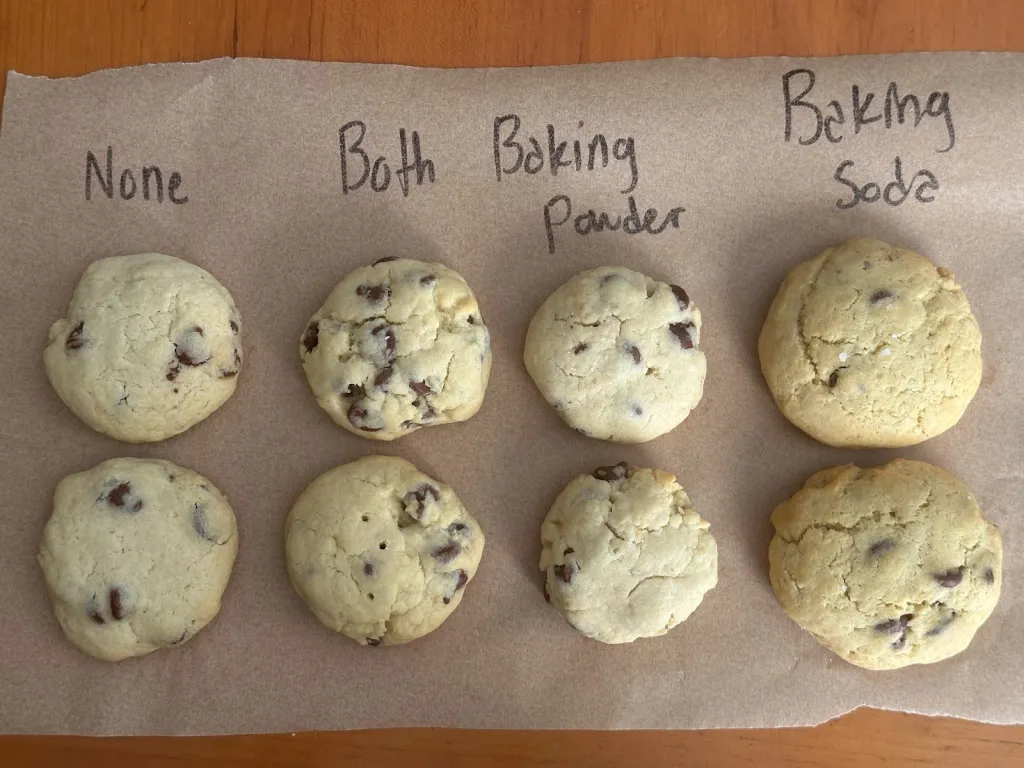




When it comes to baking, it’s easy to get confused by the many different leavening agents out there. Two of the most common and often interchanged ingredients in recipes are baking powder and baking soda. They sound similar, look similar, and are both used to make baked goods rise, but they are not the same. The question often arises: Can you use baking powder instead of baking soda?
The answer isn’t straightforward, but in this article, we’ll break down exactly how these two ingredients differ, why each is used, and what happens when you make the swap. Whether you’re a novice baker or an experienced pro, this guide will clear up the confusion and arm you with the knowledge to tackle your next recipe without worry.
1. What is Baking Soda?
Baking soda, or sodium bicarbonate, is a leavening agent that is commonly used in baking to help cakes, cookies, and other baked goods rise. It works through a simple chemical reaction when it combines with an acidic ingredient (such as vinegar, lemon juice, buttermilk, or yogurt). The reaction produces carbon dioxide gas, which forms bubbles and causes the batter or dough to expand, creating a lighter, fluffier texture.
How Baking Soda Works:
- When to use: Baking soda is best used in recipes that already contain an acid. Without acid, baking soda won’t react, and your baked goods will not rise as expected.
- pH Level: Baking soda is alkaline, and when combined with an acid, it neutralizes, producing gas bubbles and causing the batter to rise.
- Flavors: The reaction also helps neutralize any acidic flavors, making the end product more balanced in taste.
Common Uses:
- Cookies
- Cakes
- Pancakes
- Muffins
- Breads (like banana bread or quick breads)
2. What is Baking Powder?
Baking powder is a combination of baking soda, an acid (usually cream of tartar), and a starch (typically cornstarch). Unlike baking soda, baking powder doesn’t require an external acidic ingredient to activate it because it already contains acid in its formula. This makes it more versatile and easier to use in recipes that do not contain natural acids.
Types of Baking Powder:
- Single-Acting Baking Powder: This type releases gas as soon as it’s mixed with liquid. It requires immediate baking to ensure the rise.
- Double-Acting Baking Powder: This type releases gas in two stages—once when mixed with liquid and again when heated. It is more commonly used in recipes, as it provides a more reliable rise.
How Baking Powder Works:
- When to use: Baking powder is typically used in recipes that do not already contain acidic ingredients. Since it already has an acid in it, it can react and produce gas bubbles on its own.
- pH Level: The acid-base reaction in baking powder happens twice, so it can still neutralize acidic flavors without needing additional ingredients.
Common Uses:
- Biscuits
- Muffins
- Cakes
- Pancakes
3. The Key Differences Between Baking Powder and Baking Soda
While both baking powder and baking soda are leavening agents, they have distinct differences that make each suited to different types of recipes. Understanding these differences can help you avoid ruining a batch of cookies or turning your cake into a dense disaster.
| Feature | Baking Soda | Baking Powder |
|---|---|---|
| Composition | Pure sodium bicarbonate | A mixture of sodium bicarbonate, acid, and starch |
| Requires Acid? | Yes, needs an acid (vinegar, lemon juice, etc.) | No, contains acid and alkaline compounds |
| Leavening Action | Activated immediately upon contact with acid | Leavens in two stages (immediate + heat activation) |
| Taste | Slightly bitter if not neutralized | Usually neutral, does not impart flavor |
| Use in Recipes | Typically in recipes with acidic ingredients | Used in recipes without natural acids |
4. What Happens if You Swap Baking Powder for Baking Soda?
Now, let’s address the big question: What happens if you use baking powder instead of baking soda? While it might seem like a quick fix, the results are not always favorable, depending on the recipe.
4.1. Texture and Rise
Baking soda reacts instantly when combined with an acid. This rapid release of gas can result in a quick rise, which is ideal for recipes like cookies or pancakes. If you replace baking soda with baking powder, the rise may be less immediate or not as pronounced.
In recipes that require baking soda’s immediate reaction to an acid, using baking powder might lead to a denser or flatter result. You might notice that your baked goods aren’t as light and airy as they should be.
4.2. Flavor Changes
Since baking soda has a slightly bitter flavor, it works best when paired with an acid that neutralizes that bitterness. If you substitute baking powder, you may not get the same neutralization effect, and your recipe could taste a little off. Additionally, if your recipe uses a lot of acid (like buttermilk or vinegar), swapping in baking powder might alter the intended flavor balance.

4.3. Quantity Difference
A common question when making the swap is: How much baking powder should I use instead of baking soda? Because baking powder contains both the acid and the base, you’ll generally need more baking powder than you would baking soda to achieve a similar leavening effect.
A standard guideline is:
- 1 teaspoon of baking soda = 2 to 3 teaspoons of baking powder.
So, while you can substitute baking powder for baking soda in some cases, the ratios and resulting flavor may differ from the original recipe.
5. Can You Use Baking Powder Instead of Baking Soda in All Recipes?
Not every recipe will work well with this substitution. The best way to determine whether it’s a good idea is to consider the nature of the ingredients involved and how the leavening agents work within them.
Recipes That Work Well with Baking Powder:
- Muffins
- Pancakes
- Cakes (especially those that are already moist and don’t need a strong acidic component)
Recipes That May Not Work with Baking Powder:
- Cookies (especially those requiring a quick rise)
- Banana bread
- Any recipe with a significant amount of acid (like lemon or vinegar cakes)
For these more delicate recipes, it’s typically best to stick to the original leavening agent, whether it’s baking soda or baking powder.
6. Can You Use Baking Soda Instead of Baking Powder?
The reverse swap—using baking soda instead of baking powder—is much more complicated. Because baking soda requires an acid to activate it, a recipe that calls for baking powder (which already contains an acid) will not rise properly if you simply replace it with baking soda. To make the swap work, you’d need to add a separate acid to balance the baking soda, but even then, the results may not be as predictable.
7. Conclusion
In summary, while you can substitute baking powder for baking soda in certain situations, it’s not always a perfect one-to-one swap. The results will depend heavily on the recipe’s ingredients and the specific leavening requirements. If you’re in a pinch, baking powder can step in for baking soda, but you might need to adjust the quantities and consider the flavor impact.
As a general rule, always aim to follow the recipe as written. But if you find yourself without one of these ingredients, now you have the knowledge to make an informed decision and adjust accordingly. Happy baking!